
Key insights at a glance
Between 1996 and 2025, global outbreak patterns show three clear signals. First, COVID-19 and influenza dominate outbreak counts across nearly all regions, proving that highly transmissible respiratory diseases remain the biggest global threat. Second, Africa, especially Sub-Saharan Africa and the Democratic Republic of Congo, experiences a disproportionately high number of outbreaks, influenced by structural and environmental factors. Third, outbreak counts surged dramatically after 2020 and have remained high, suggesting either improved surveillance after COVID-19, a real increase in outbreaks, or both. Together, these insights highlight the urgent need for continuous global surveillance, cross-border cooperation, and attention to social and environmental drivers of disease.
This article explores those findings in detail using the Global Pandemic and Epidemic-Prone Disease Outbreaks dataset.
About the Global Pandemic and Epidemic-Prone Disease Outbreaks Dataset
The Global Pandemic and Epidemic-Prone Disease Outbreaks dataset is publicly available through the Humanitarian Data Exchange. It is the result of a collaborative research effort by teams from the University of Göttingen, the University of Groningen, and the University of Bordeaux. The project was supported by the ENLIGHT network, the German Academic Exchange Service (DAAD), and the German Federal Ministry of Education and Research (BMBF).
The dataset covers a 30-year period from 1996 to 2025 and includes more than 3,000 recorded outbreaks associated with over 90 infectious diseases. This long timeframe makes it particularly valuable for understanding historical trends, shifts in disease dominance, and changes in global outbreak dynamics.
What Counts as an Outbreak in This Dataset
The unit of analysis in this database is an outbreak, defined as the occurrence of at least one case of a specific disease in a country or territory within a given year.
This definition has several important implications:
A country cannot have more than one outbreak of the same disease in the same year. A country can experience multiple outbreaks in the same year only if they involve different diseases. Multiple outbreaks of the same disease in one country are only counted if they occur in different years.
This approach allows for global comparability but also introduces limitations that must be kept in mind when interpreting the results.
Important Biases and Limitations to Consider
Because the dataset relies on country and year as core variables, some biases are unavoidable.
Outbreak intensity may be underestimated in countries with large populations or in situations where multiple waves occur within a single year. Conversely, outbreaks may be overestimated when a single event spans two calendar years or affects multiple small countries within the same region.
As a result, this analysis should be seen as a high-level overview of outbreak patterns rather than a precise measurement of disease burden. More definitive conclusions would require additional variables such as case counts, mortality, duration, and population-adjusted rates.
Most Frequent Outbreak Diseases Globally
Across the full dataset, 91 diseases are represented. However, outbreak counts are heavily concentrated among a small number of diseases.
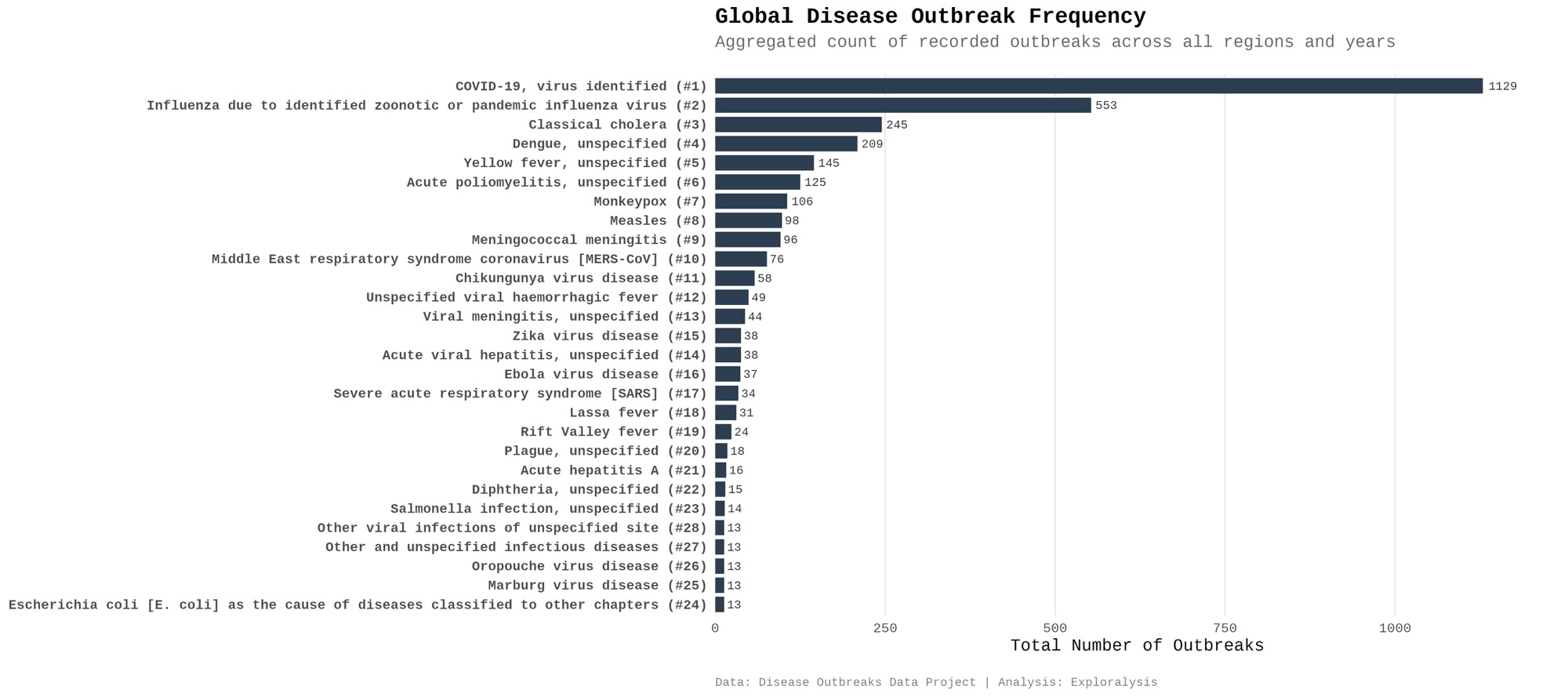
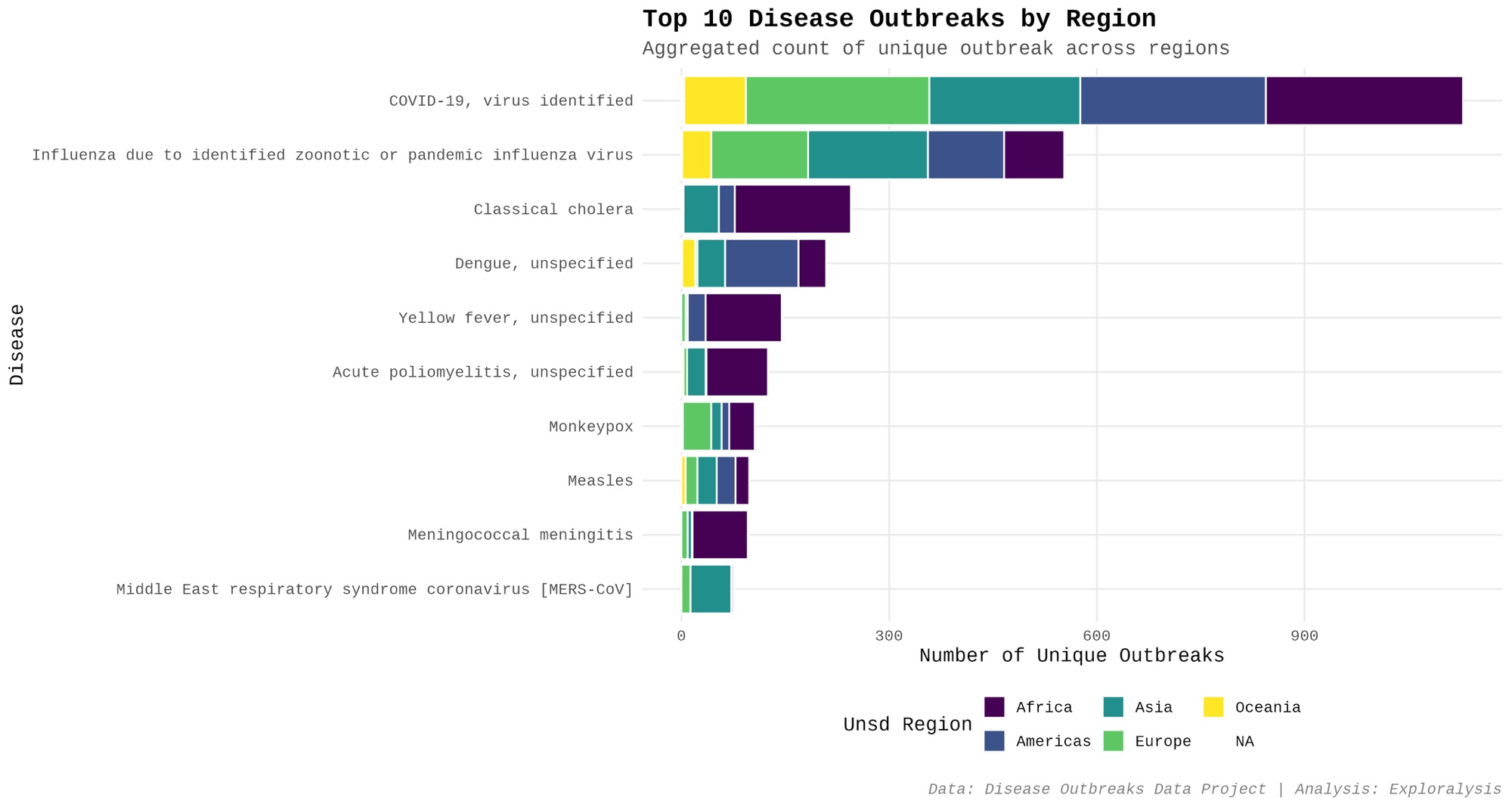
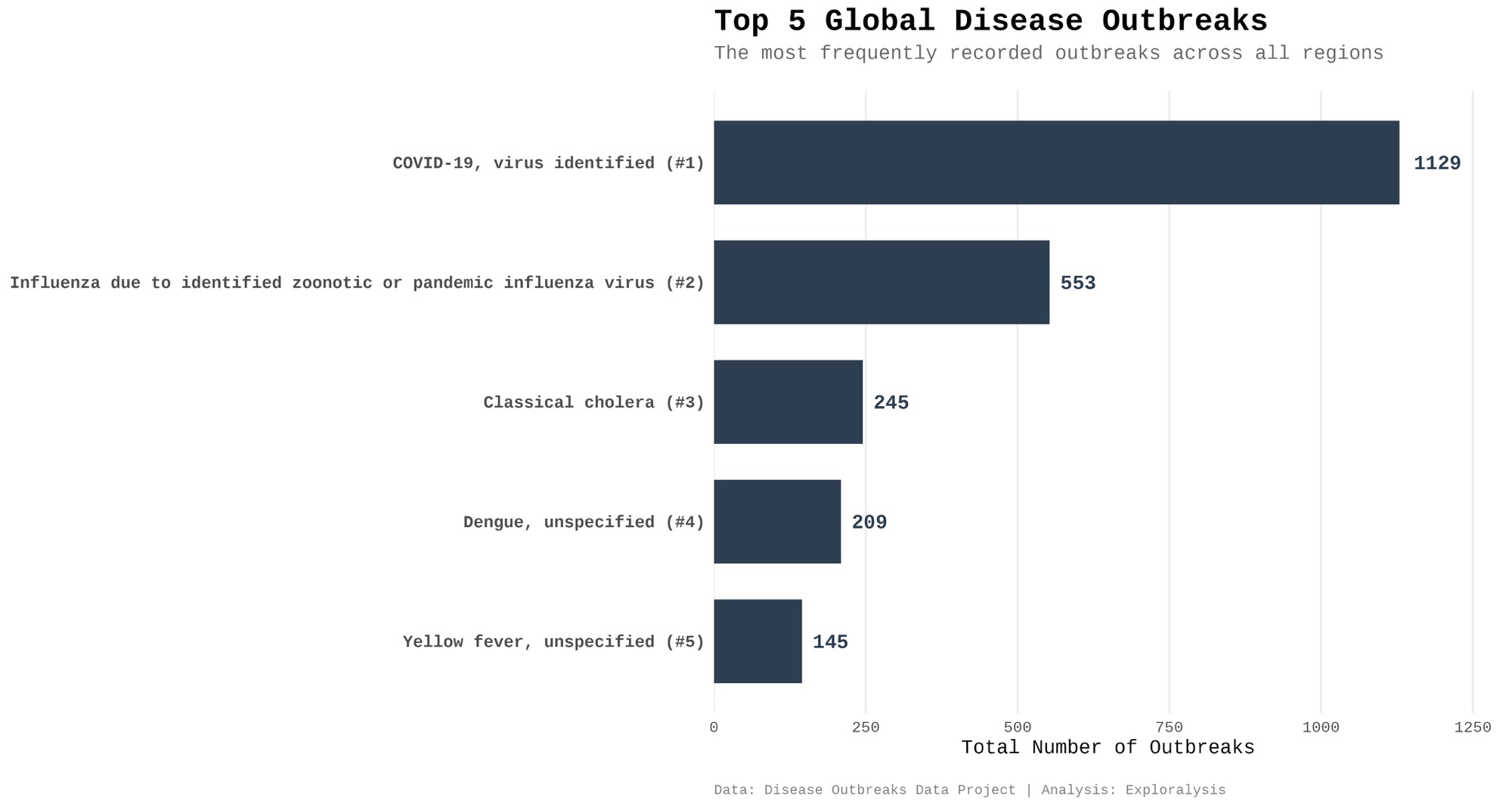
The top 10 diseases by number of outbreaks are:
- COVID-19 with 1129 outbreaks
- Influenza due to identified zoonotic or pandemic influenza virus with 553 outbreaks
- Classical cholera with 245 outbreaks
- Dengue with 209 outbreaks
- Yellow fever with 145 outbreaks
- Acute poliomyelitis with 125 outbreaks
- Monkeypox with 106 outbreaks
- Measles with 98 outbreaks
- Meningococcal meningitis with 96 outbreaks
- Middle East respiratory syndrome coronavirus (MERS-CoV) with 76 outbreaks
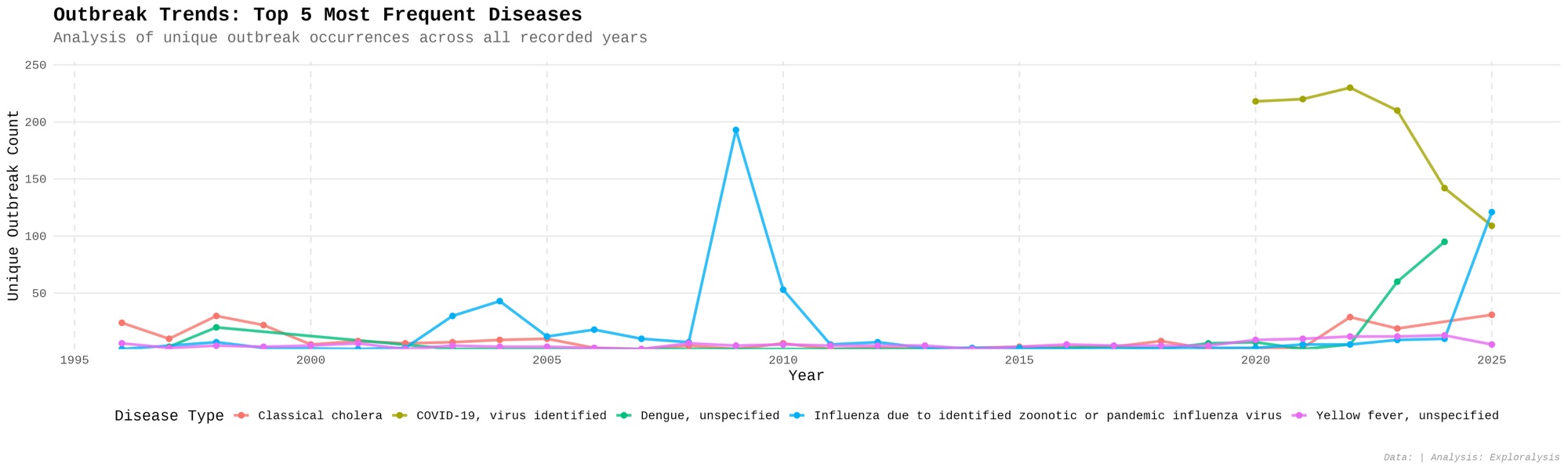
COVID-19 dominates the dataset, which is not surprising given its global spread, multi-year persistence, and inclusion through 2025, even as outbreak counts decline in later years.
Influenza also stands out as a persistent and recurring global threat, reinforcing its role as one of the most important pandemic-prone diseases in modern history.
Why High-Profile Diseases Are Not Always the Most Frequent
Diseases such as Ebola and Zika appear lower in outbreak rankings, even though they receive significant media attention. Both Ebola and Zika rank around 16th in outbreak frequency.
Their prominence is driven not by how often they occur, but by how deadly or disruptive they can be. High case fatality rates, severe complications, and fear of rapid escalation make these diseases highly visible despite lower outbreak counts.
This distinction highlights an important point. Frequency and severity are not the same, and both must be considered in outbreak preparedness.
Global Distribution of Outbreaks by Country and Region
Countries with the Most Outbreaks
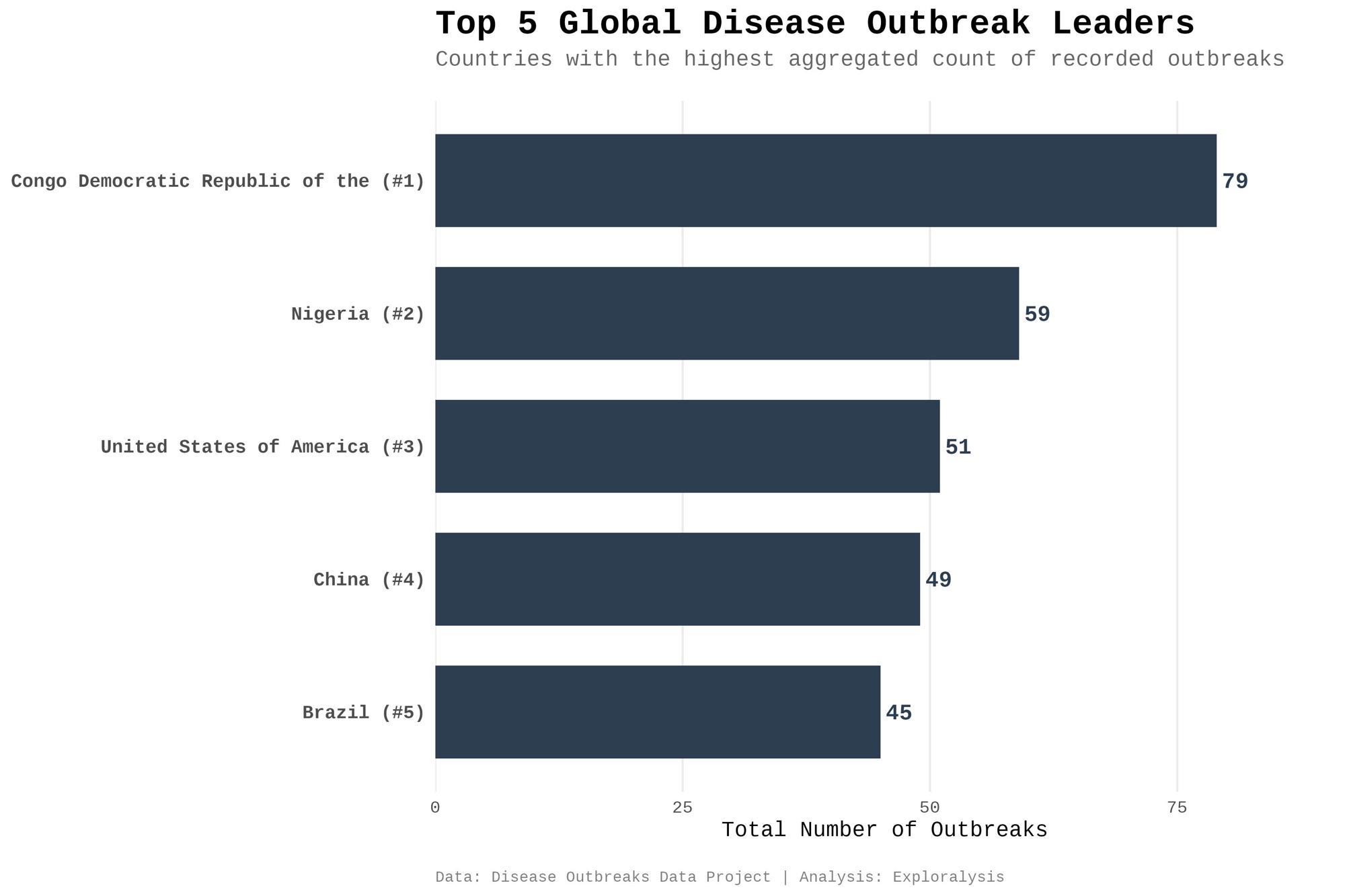
The dataset contains 236 country-level geographic entities. Among them, the Democratic Republic of Congo stands out clearly as the country with the highest number of outbreaks.
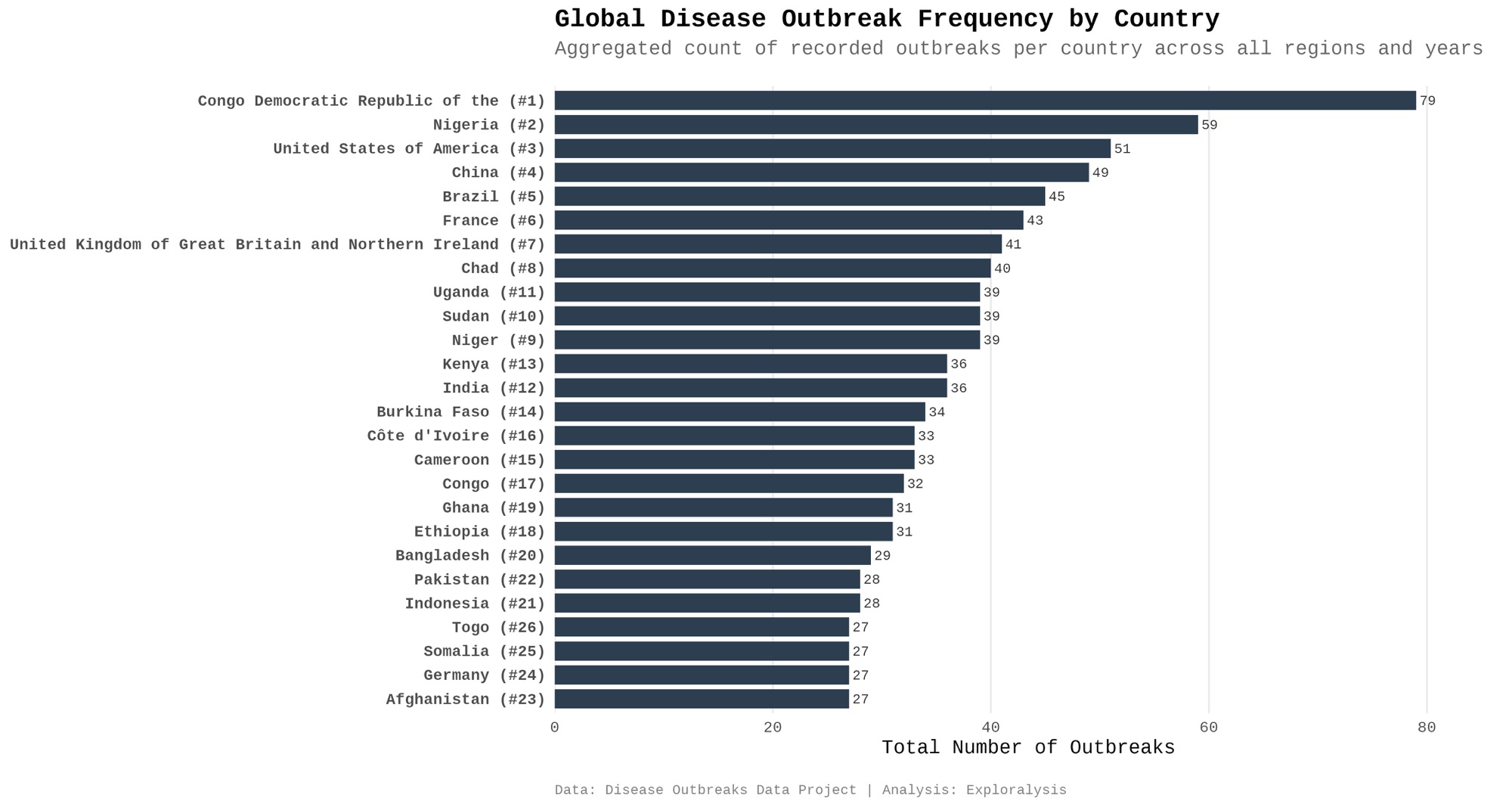
Other countries in the top five include Nigeria, the United States, China, and Brazil.
The prominence of the Democratic Republic of Congo reflects a combination of regional risk factors and local conditions that increase vulnerability to repeated outbreaks.
Regional Patterns
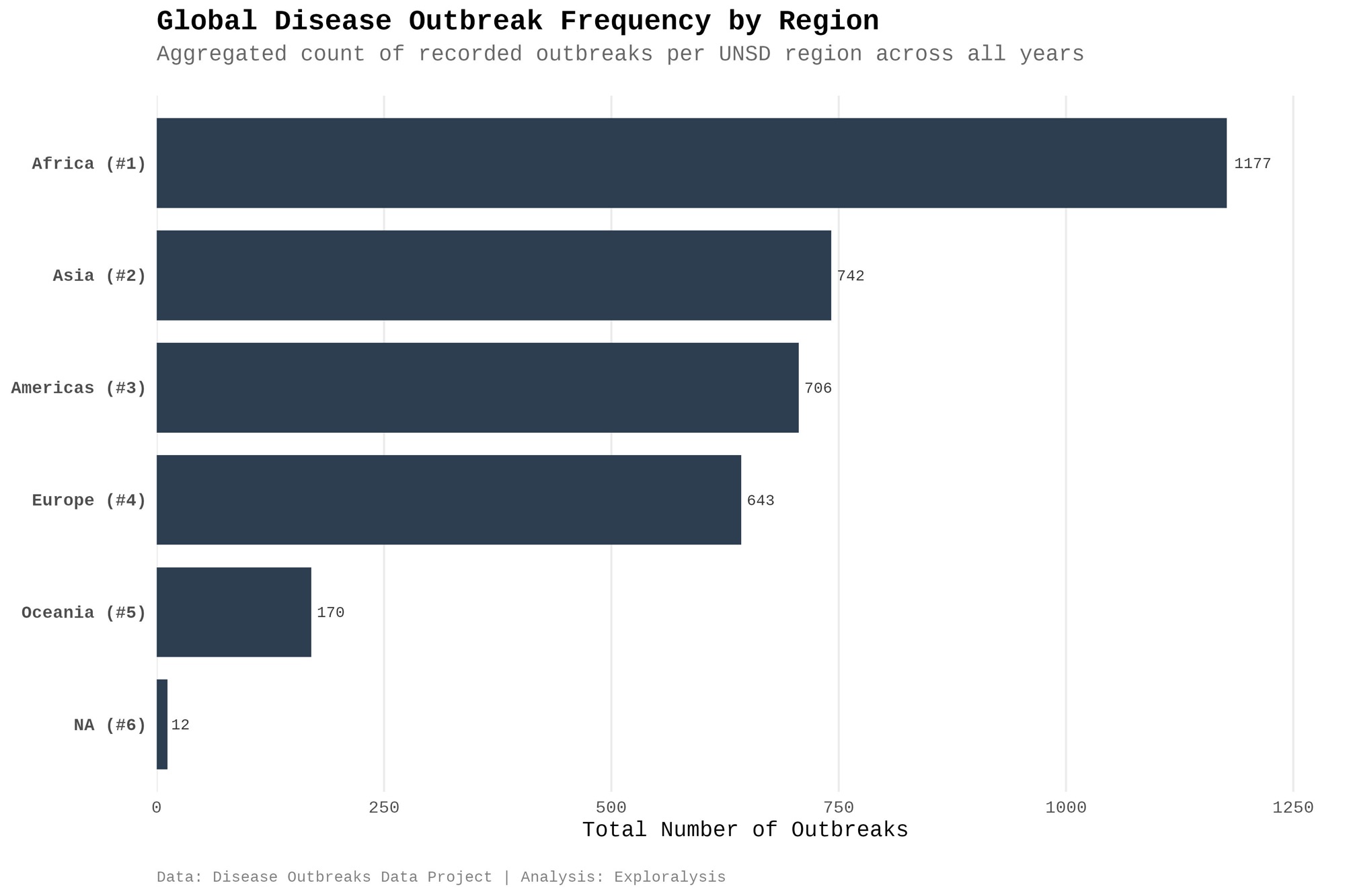
Africa is the most affected continent, with 1177 outbreaks over the 30-year period. This number far exceeds other continents.
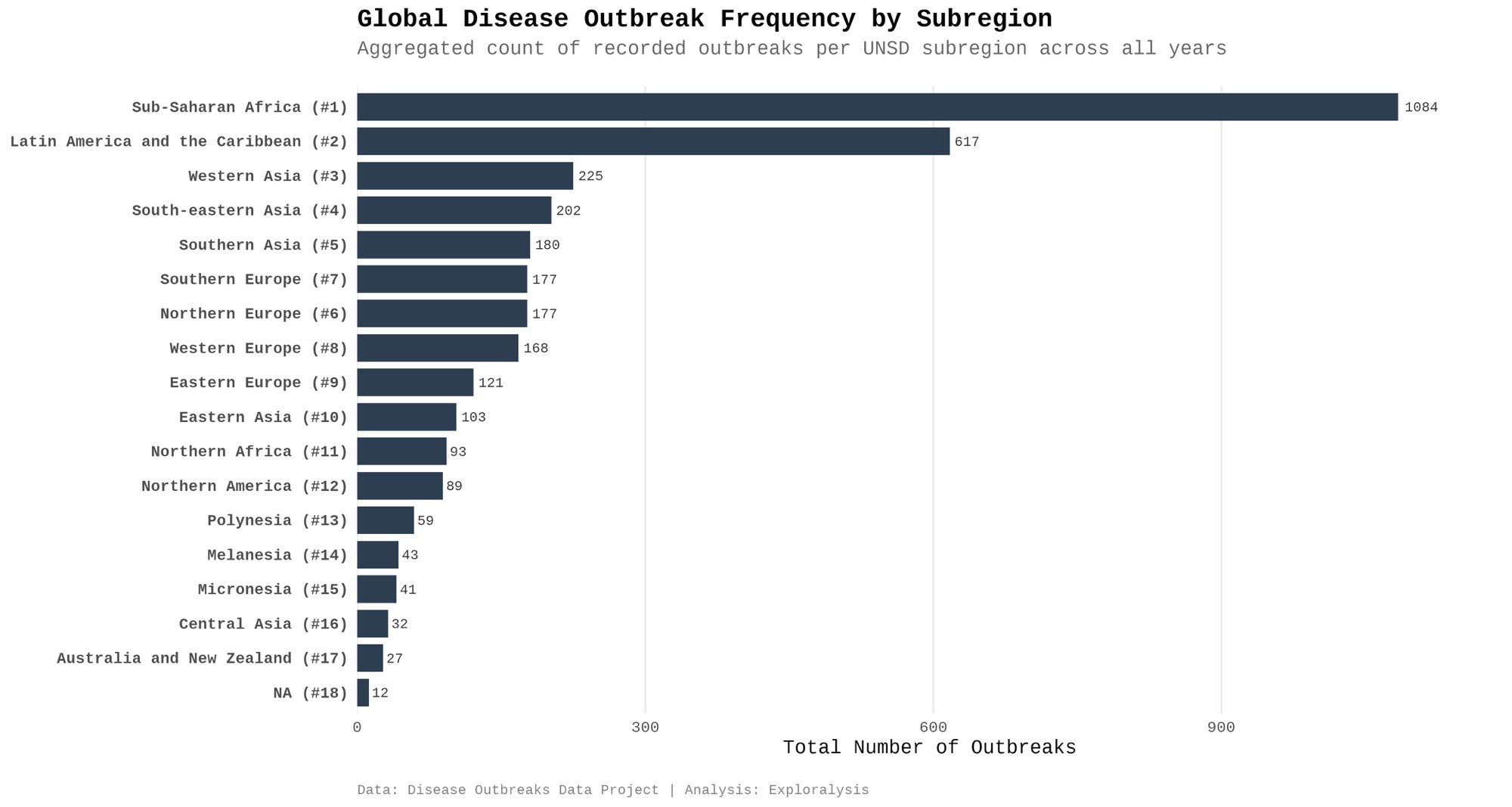
At the subregional level, two areas stand out strongly:
- Sub-Saharan Africa
- Latin America and the Caribbean
These subregions’ notably higher outbreak counts may indicate persistent structural and environmental vulnerabilities.
Why Africa Leads in Outbreak Counts
Brief background research suggests several interconnected reasons for Africa’s prominence in the data:
Ongoing conflict and political instability High levels of poverty Rapid population growth and urbanization Limited access to clean water and sanitation Weak or overstretched public health systems Widespread bushmeat hunting and close human-wildlife contact
In the case of the Democratic Republic of Congo, high biodiversity in the Congo Basin further increases the risk of zoonotic spillover, where pathogens jump from animals to humans.
Outbreak Trends Over Time
When outbreak counts are plotted as a time series, several important patterns emerge.
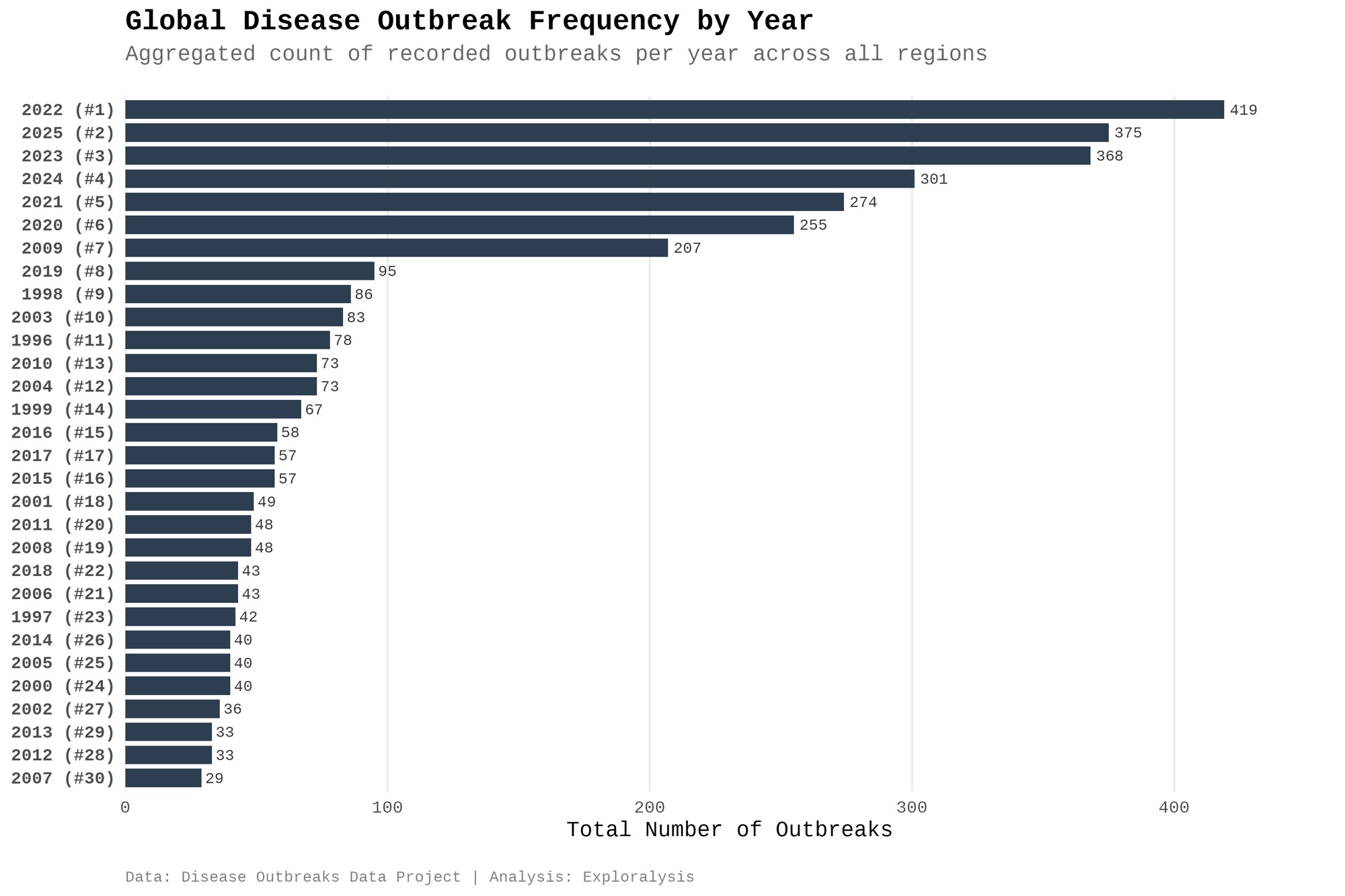
From 1996 to 2019, annual outbreak counts remain relatively stable, typically below 100 per year. One notable exception occurs in 2009, when outbreaks spike to 207, largely driven by pandemic influenza.
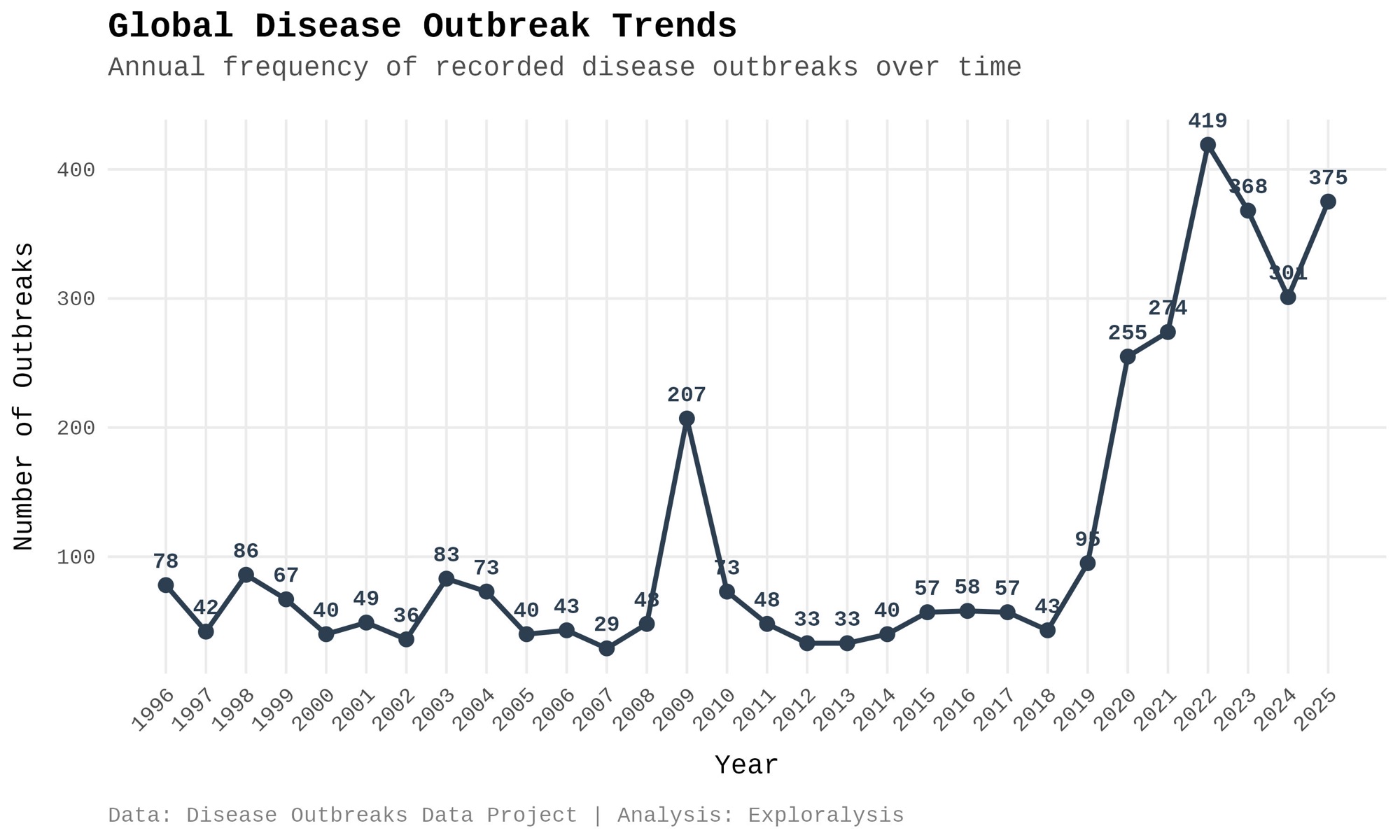
Starting in 2020, outbreak counts rise dramatically. Since then, annual totals consistently exceed 250, with the highest counts occurring in 2022, 2025, and 2023.
This sustained elevation may reflect improved surveillance and reporting following COVID-19, a real increase in outbreaks, or a combination of both. Regardless of the cause, the implication is clear. The global risk environment has changed, and complacency is no longer an option.
Disease Patterns by Continent
Examining the top outbreak diseases by continent reveals both shared and region-specific risks.
COVID-19, influenza, and measles affect all continents in broadly proportional ways. However, other diseases show strong regional concentration.
Cholera, yellow fever, acute poliomyelitis, and meningococcal meningitis disproportionately affect Africa Dengue is more prominent in the Americas Monkeypox appears disproportionately in Europe MERS-CoV is concentrated in Asia
These patterns underline the importance of tailoring public health strategies to regional disease profiles rather than relying on a one-size-fits-all approach.
How Major Diseases Behave Over Time
Looking more closely at the five most frequent diseases reveals distinct temporal dynamics.
Influenza shows a major peak in 2009, followed by a rapid decline and gradual re-emergence toward 2025. Smaller peaks appear in the early 2000s.
COVID-19 emerges suddenly in 2020, dominates global outbreak counts for four years, and then declines sharply. Its abrupt appearance raises an uncomfortable question. Could another unknown disease emerge just as suddenly?
Dengue rises sharply in 2023 and 2024 before seemingly disappearing from the dataset. Cholera, in contrast, shows a slow but steady rise from 2021 to 2025.
Yellow fever remains consistently present but at relatively low levels throughout the entire period.
Subregional Patterns and How They Differ
Breaking the data down by subregion reveals important deviations from the global pattern, while still showing several consistent themes across different parts of the world.
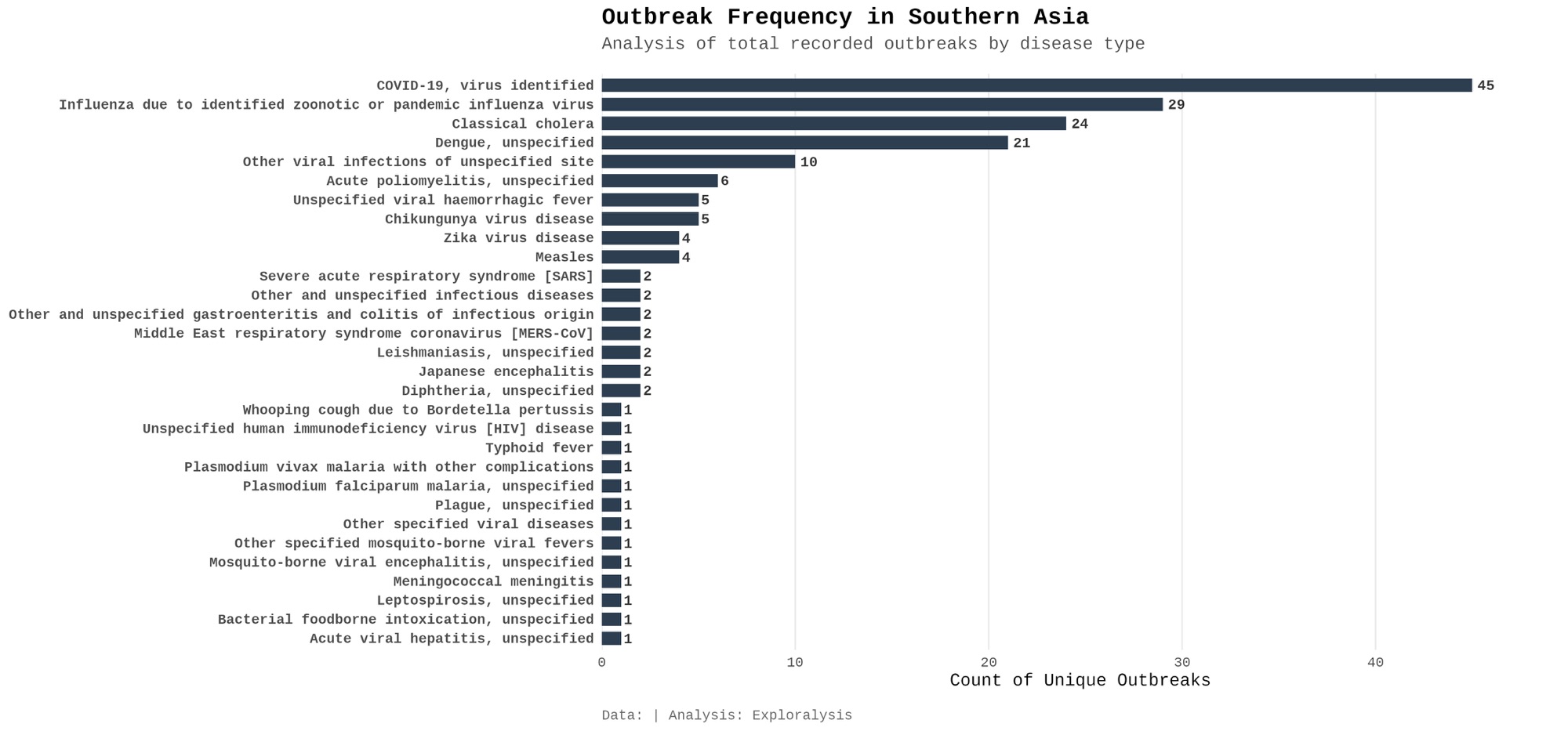
Southern Asia, which includes countries such as India, Pakistan, Bangladesh, Iran, and Afghanistan, closely mirrors global trends. COVID-19 and influenza dominate outbreak records, and overall the leading diseases in this subregion align closely with the global top categories.
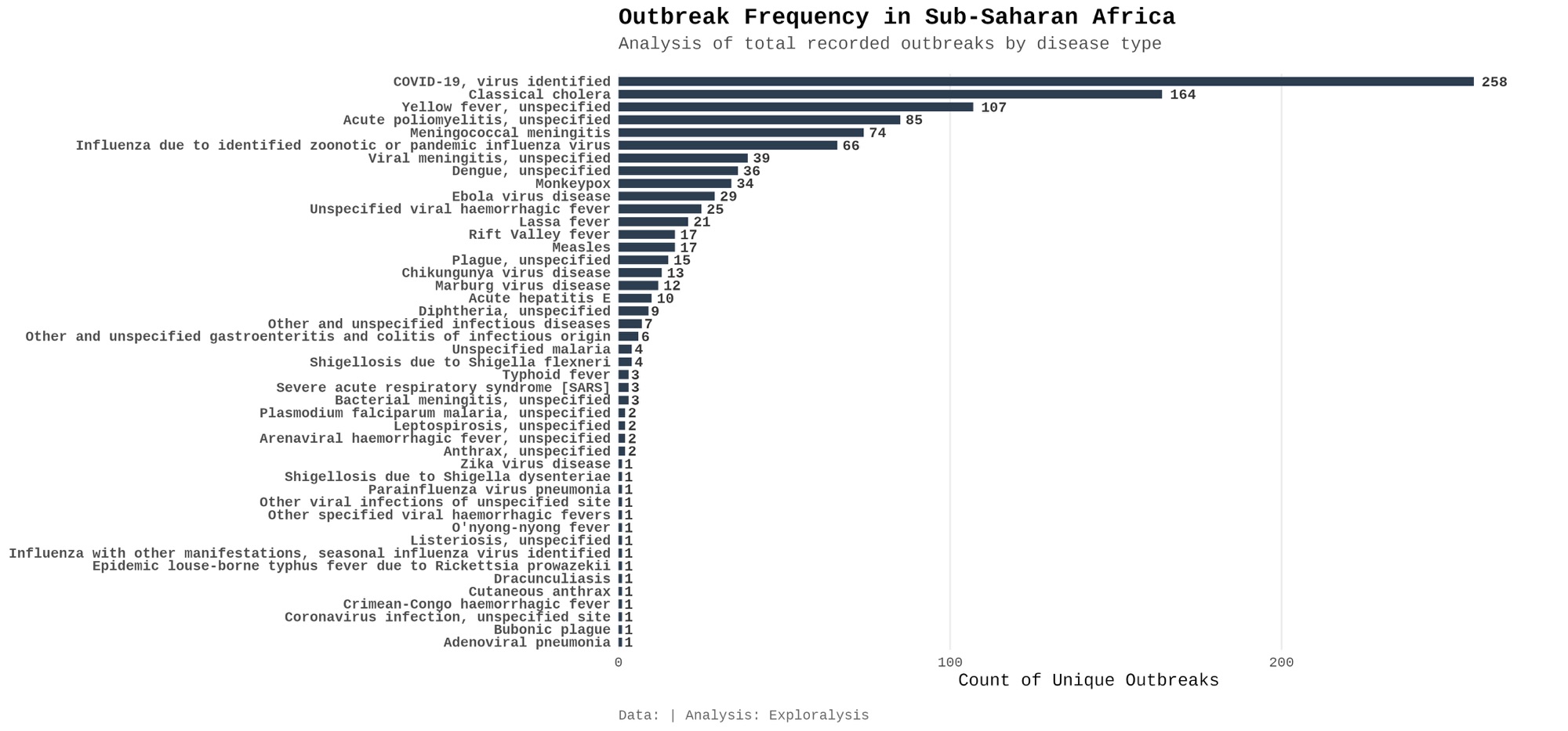
Sub-Saharan Africa, which includes countries such as Nigeria, South Africa, Kenya, Ethiopia, and Ghana, generally follows the global pattern. However, acute poliomyelitis and meningococcal meningitis rank unusually high compared to other regions, making the outbreak profile more distinct.
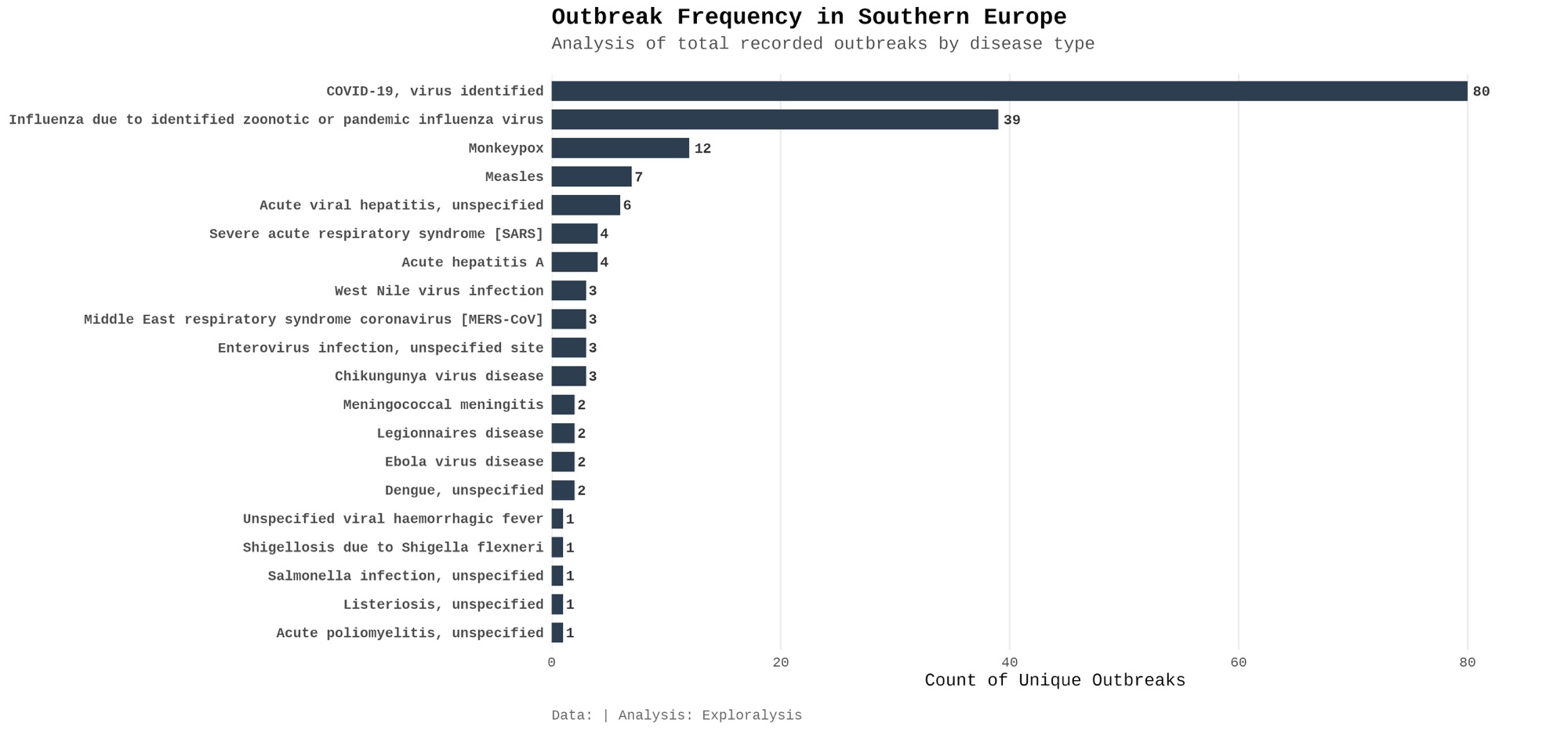
Southern Europe, with countries such as Italy, Spain, Greece, Portugal, and Croatia, follows the global trend with COVID-19 and influenza at the top. These are followed by outbreaks of monkeypox and measles, which stand out more clearly in this subregion.
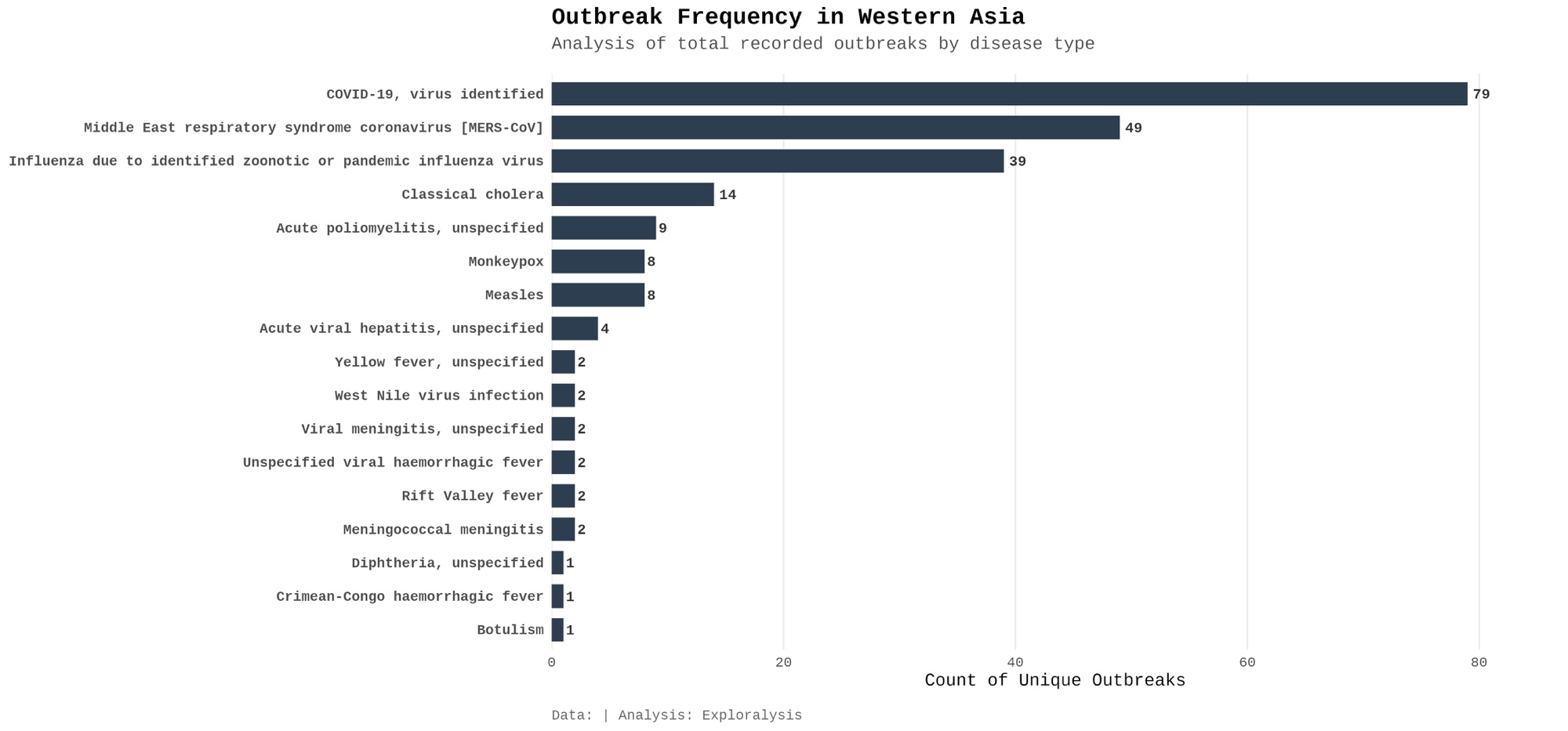
Western Asia includes countries such as Saudi Arabia, Turkey, Israel, the United Arab Emirates, and Iran. Here COVID-19 and influenza dominate outbreak records, with MERS-CoV also standing out prominently, followed by cholera.
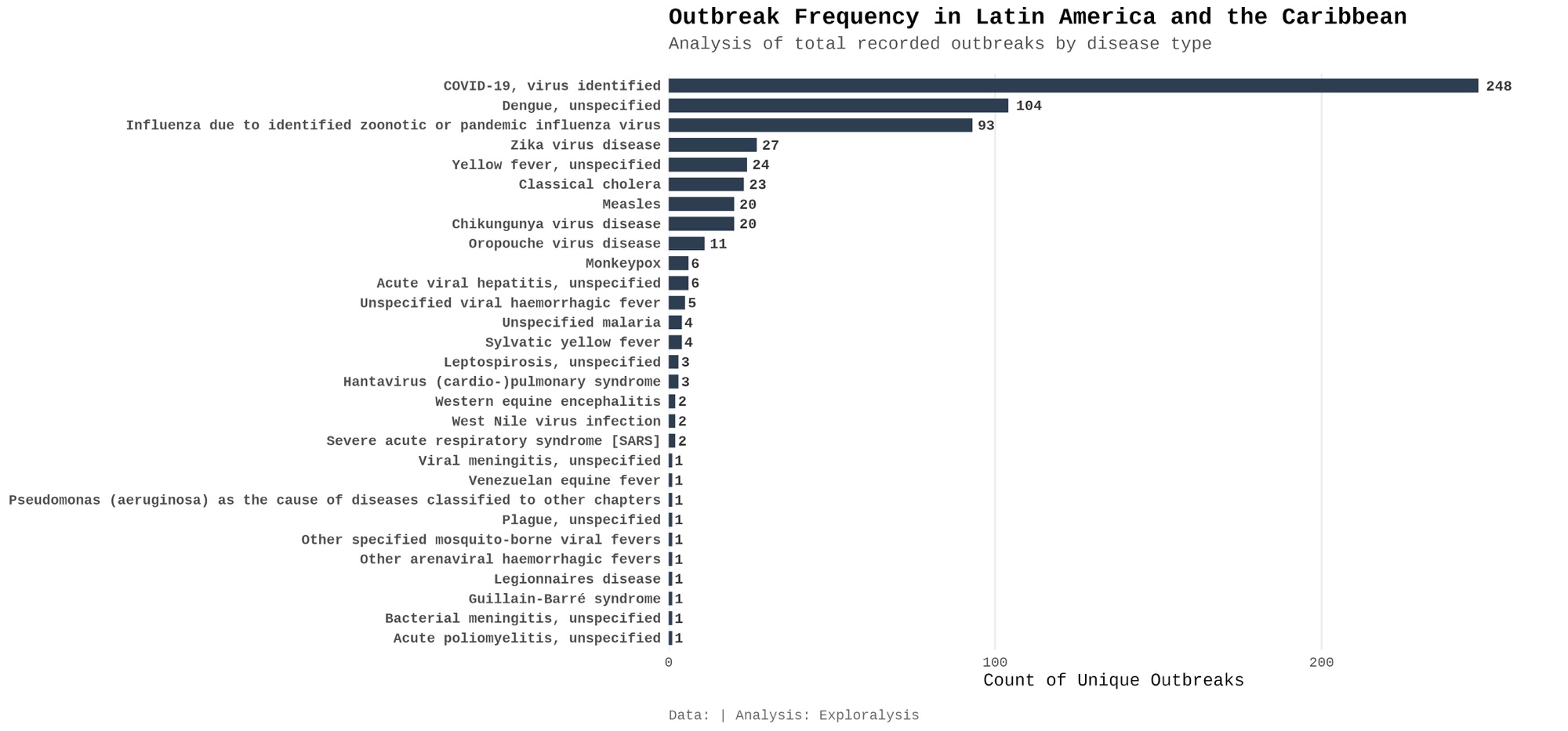
Latin America and the Caribbean, covering countries such as Brazil, Mexico, Argentina, Colombia, and Chile, are characterized by a strong presence of COVID-19, dengue, and influenza as the most prominent outbreak diseases.
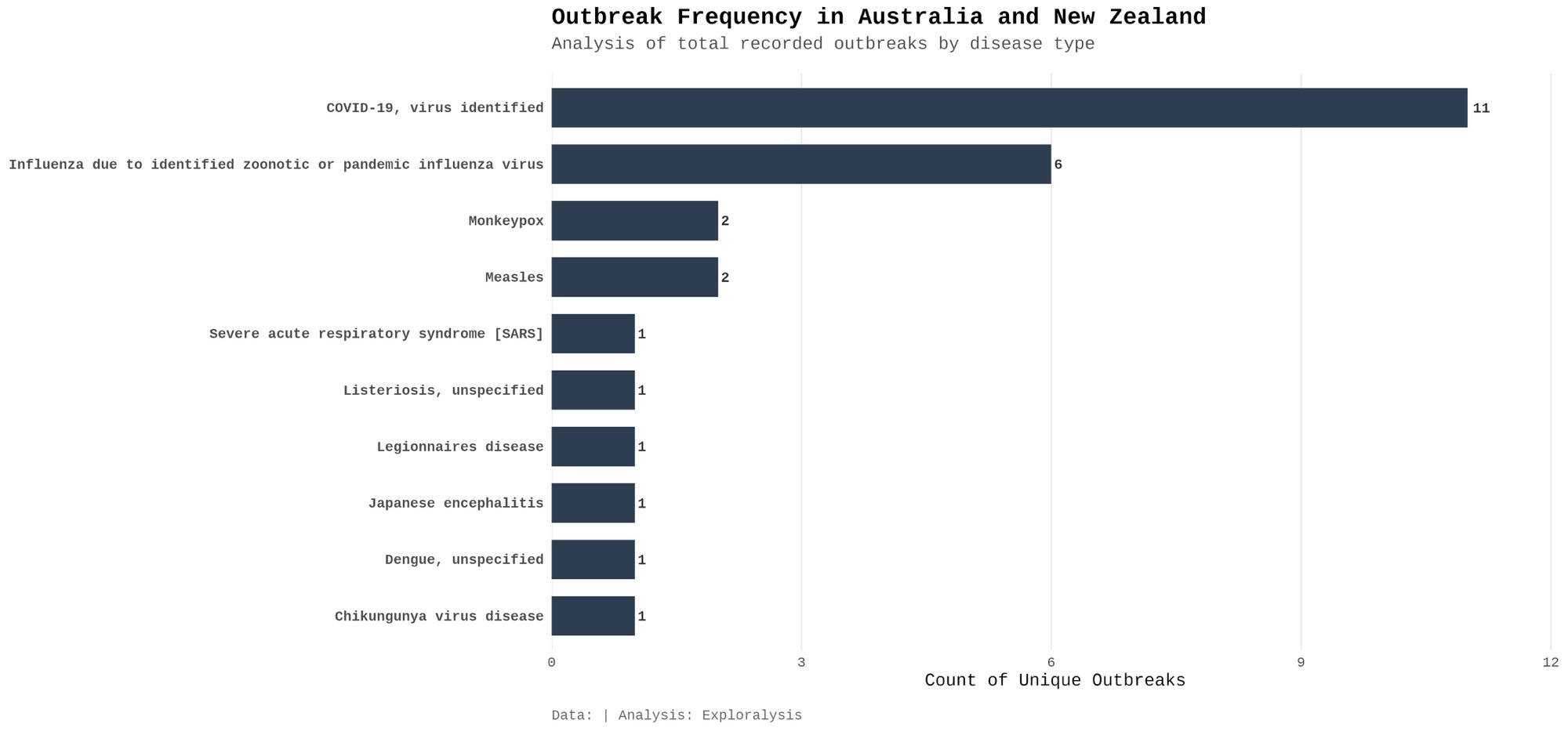
Australia and New Zealand follow the global trend with COVID-19 and influenza as the most frequent outbreaks. These are followed by monkeypox and measles.
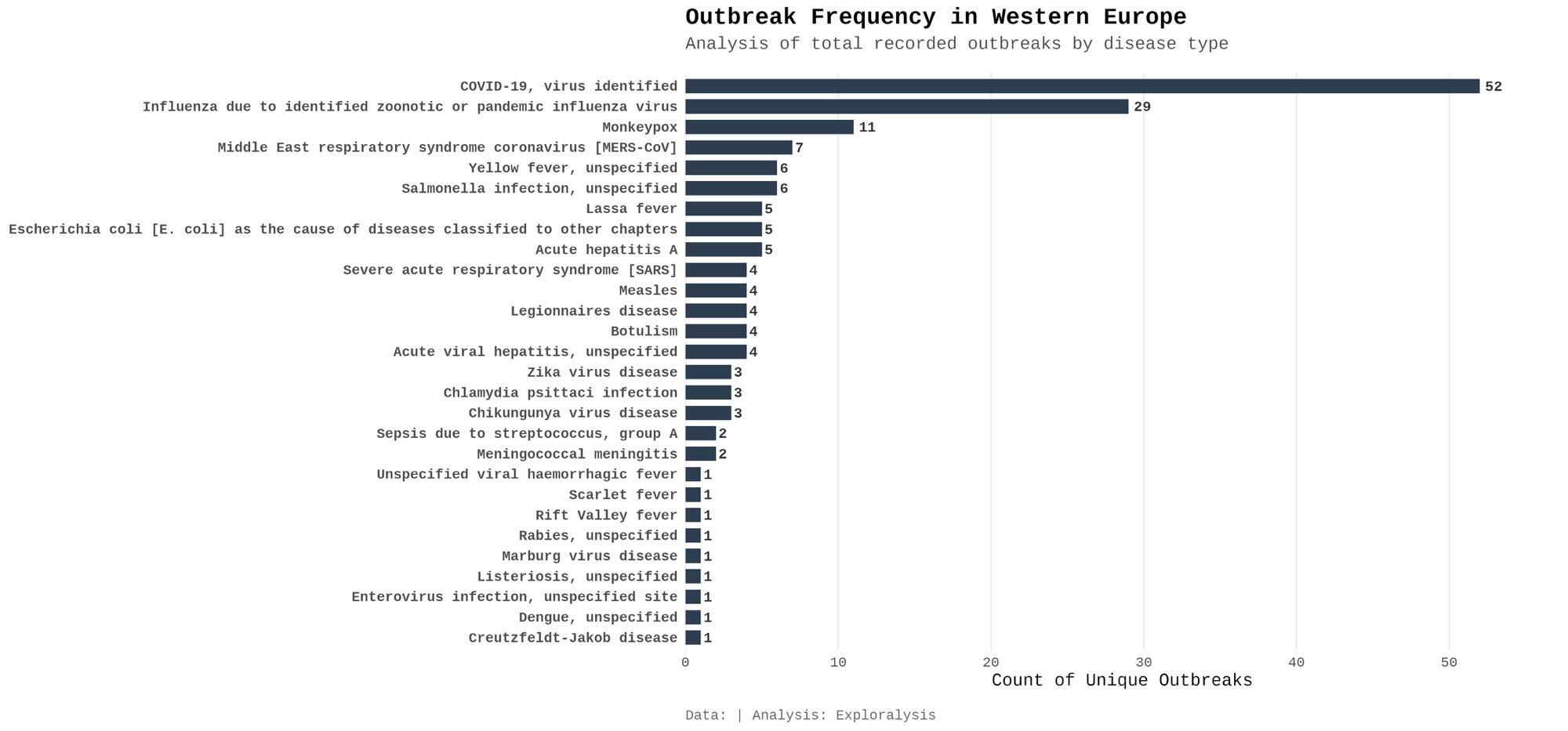
Western Europe, which includes countries such as Germany, France, the United Kingdom, the Netherlands, and Belgium, shows COVID-19 and influenza at the top, consistent with global patterns. Monkeypox and other diseases appear next in the outbreak rankings.
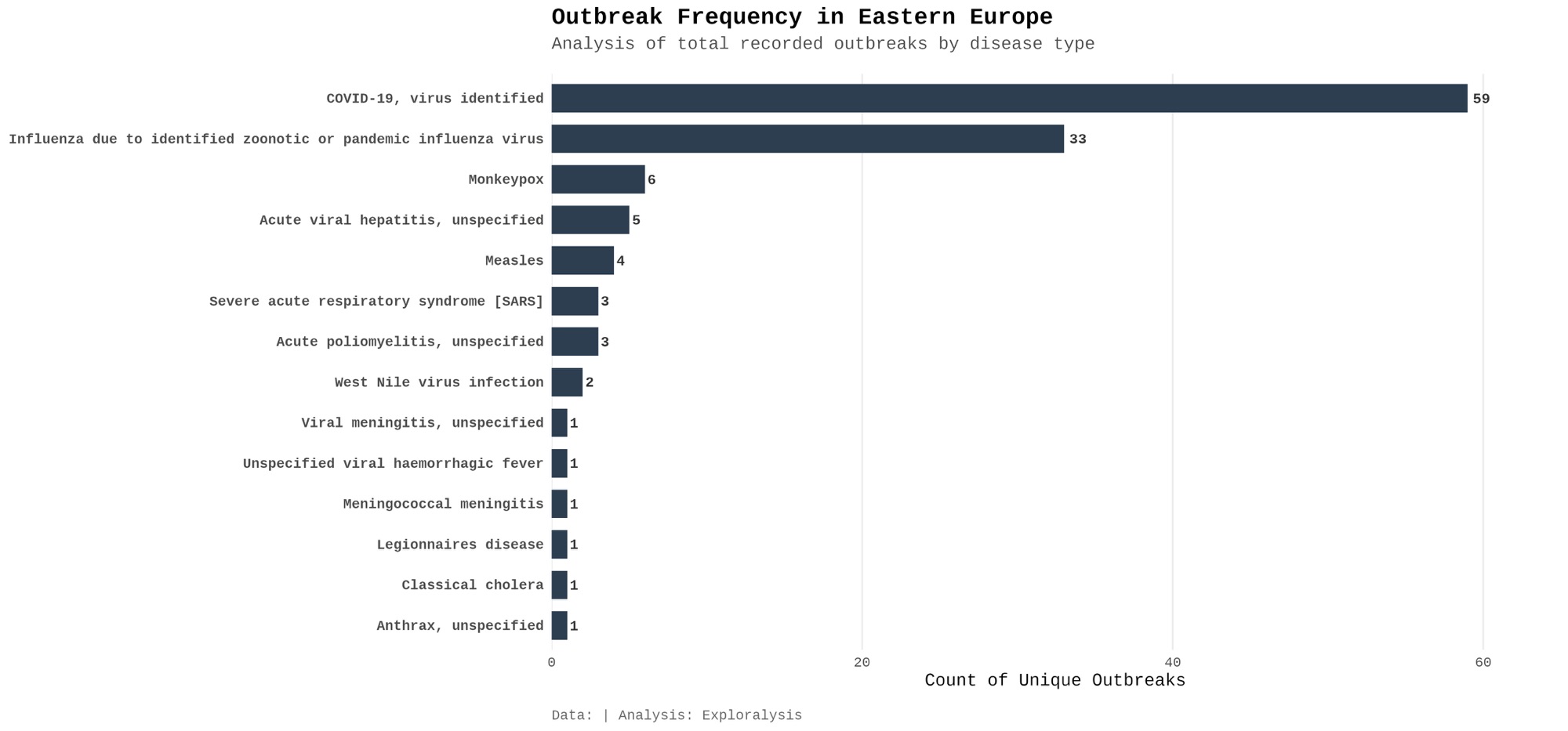
Eastern Europe, with countries such as Russia, Poland, Ukraine, the Czech Republic, and Hungary, also follows the global trend for the top two diseases, COVID-19 and influenza. These are followed by monkeypox and acute viral hepatitis.
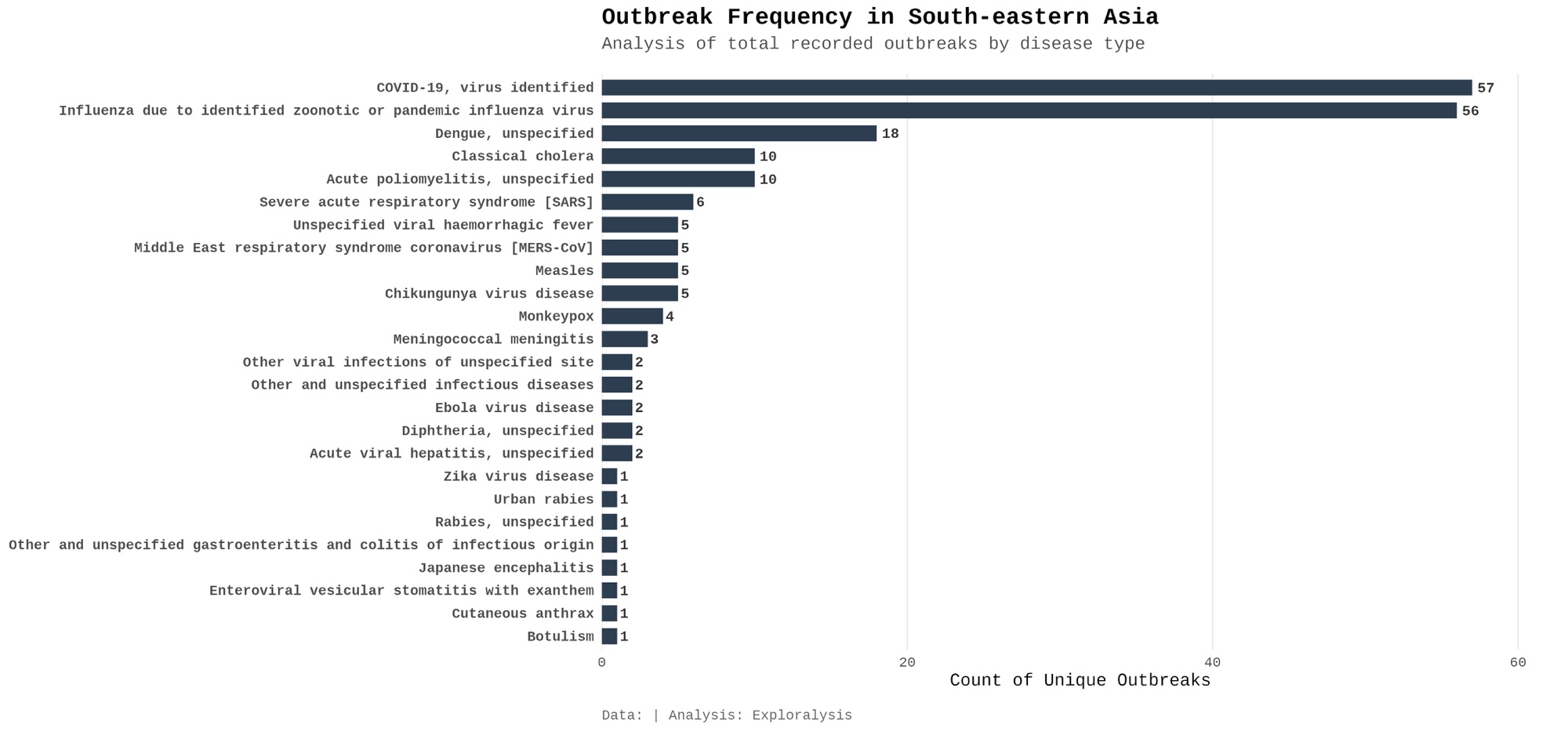
South-eastern Asia includes countries such as Indonesia, Thailand, Vietnam, Singapore, the Philippines, and Malaysia. Here COVID-19 and influenza dominate, consistent with global trends, followed by dengue, acute poliomyelitis, and cholera.
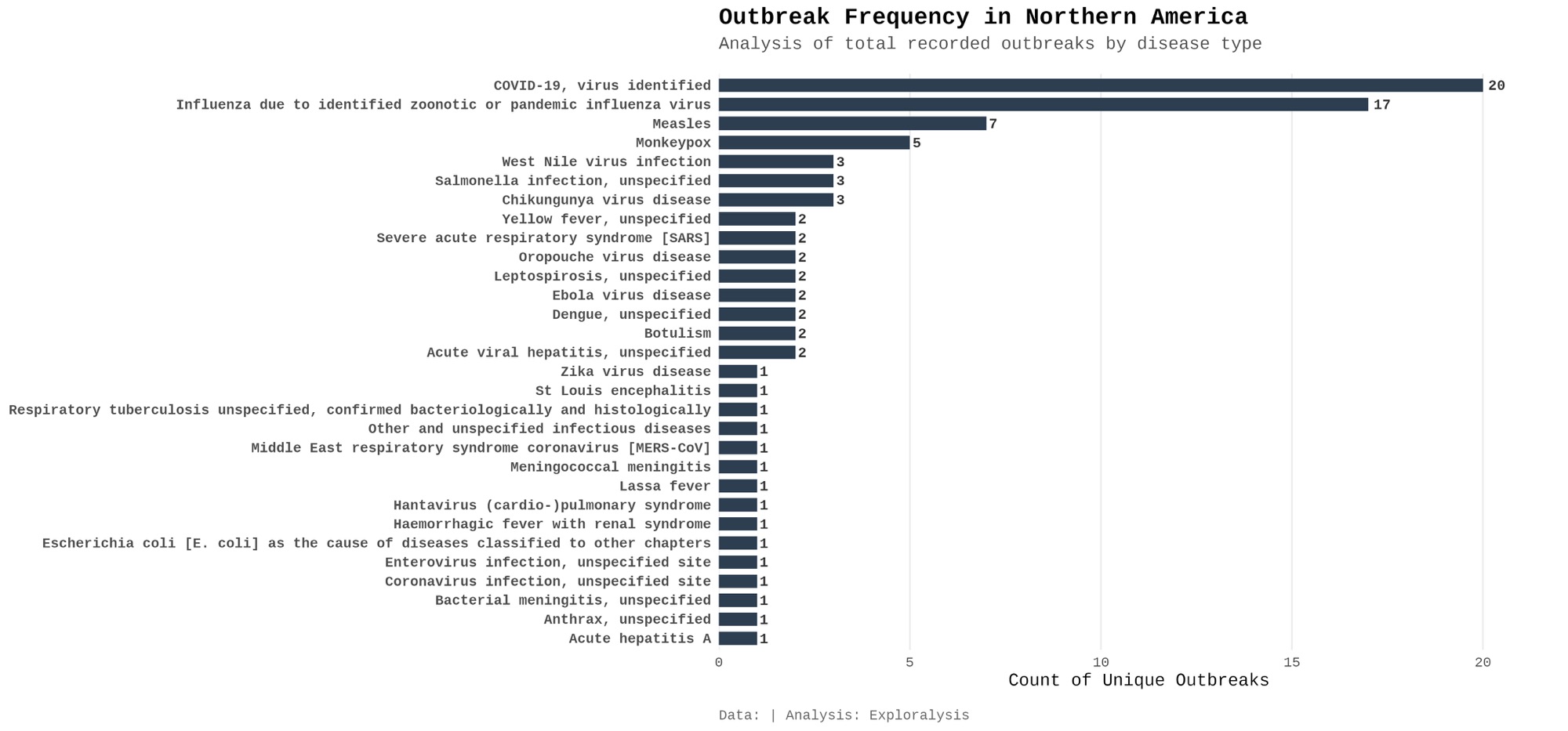
Northern America, which includes the United States and Canada, follows the global pattern for the top two outbreak diseases, COVID-19 and influenza. However, measles and monkeypox rank higher here compared to many other regions.
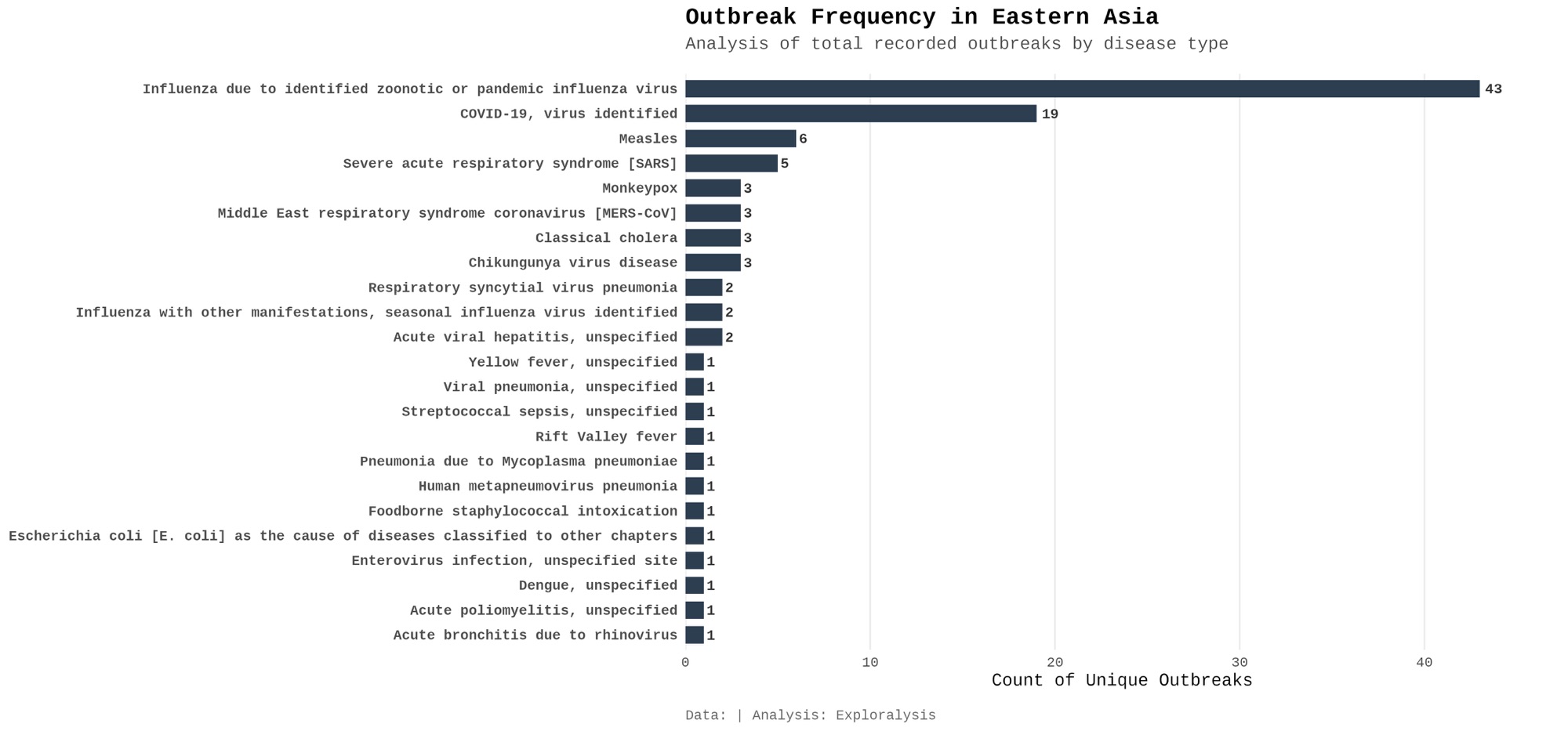
Eastern Asia, with countries such as China, Japan, South Korea, North Korea, and Mongolia, differs from the global trend. Influenza ranks above COVID-19, followed by severe acute respiratory syndrome (SARS) and measles.
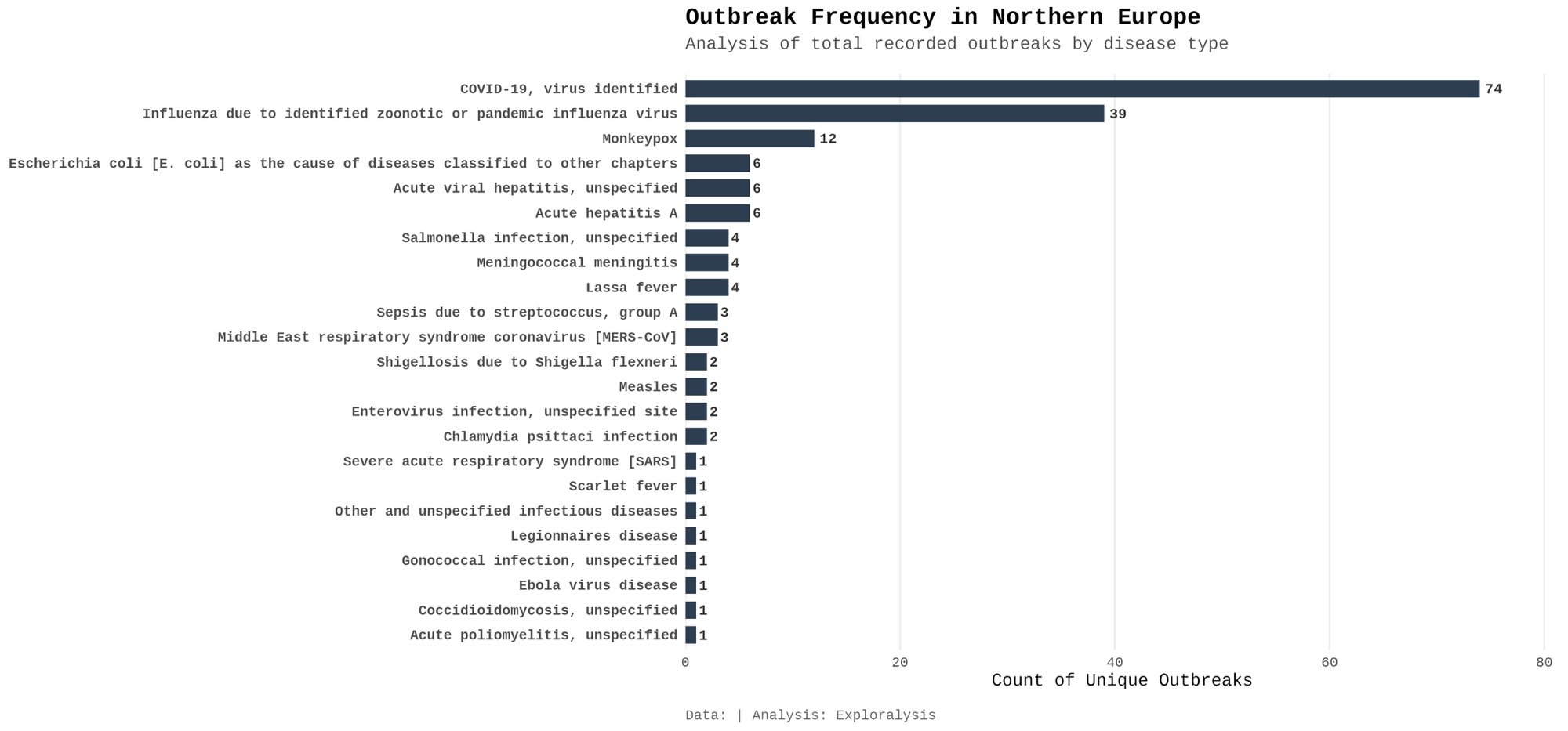
Northern Europe includes countries such as Sweden, Norway, Denmark, Finland, and Iceland. Here COVID-19 and influenza remain the most prominent outbreak diseases, followed by monkeypox, with additional outbreaks involving E. coli related diseases and acute viral hepatitis.
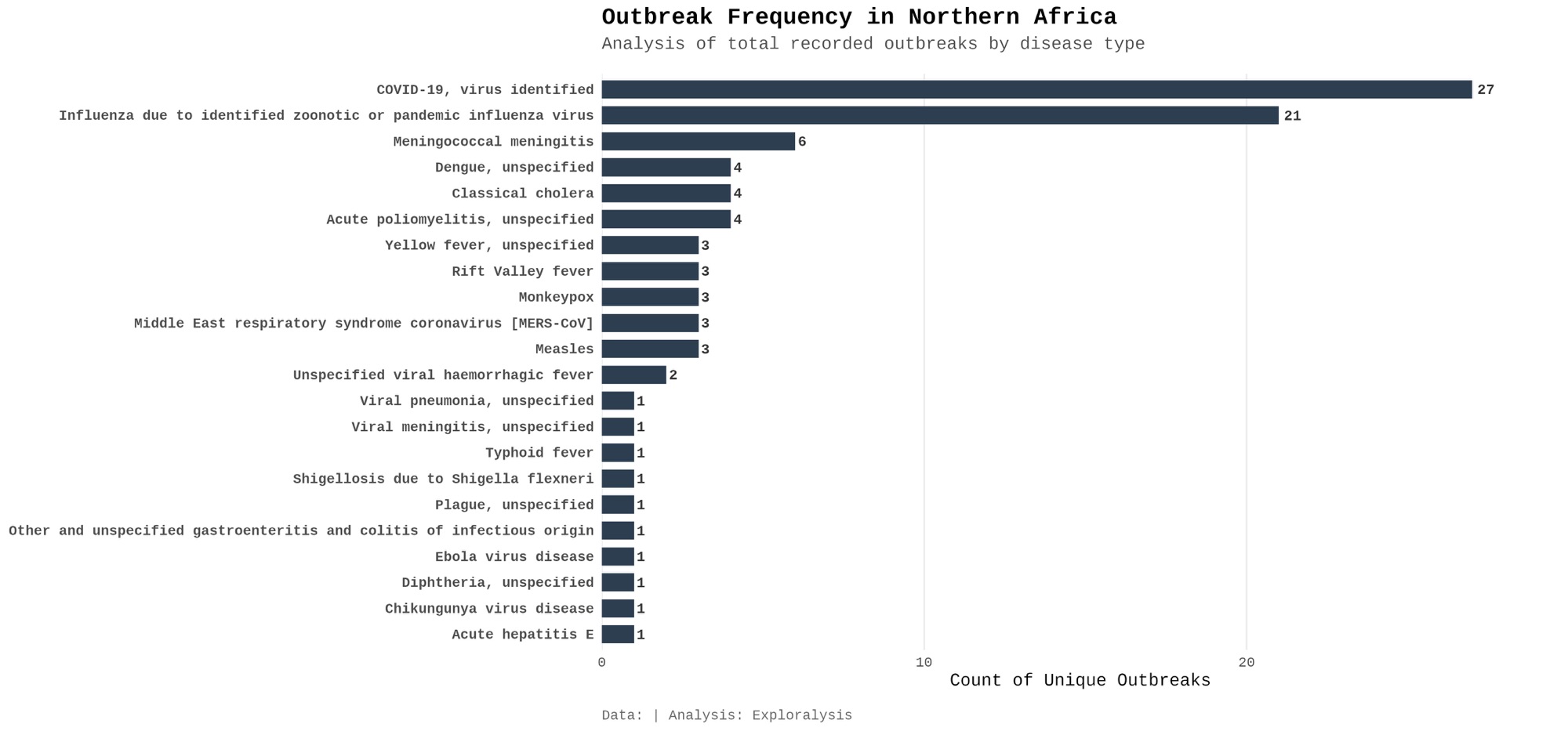
Northern Africa, with countries such as Egypt, Morocco, Algeria, Tunisia, and Libya, follows the global trend for COVID-19 and influenza. These are followed by meningococcal meningitis, and then by dengue, acute poliomyelitis, and cholera.
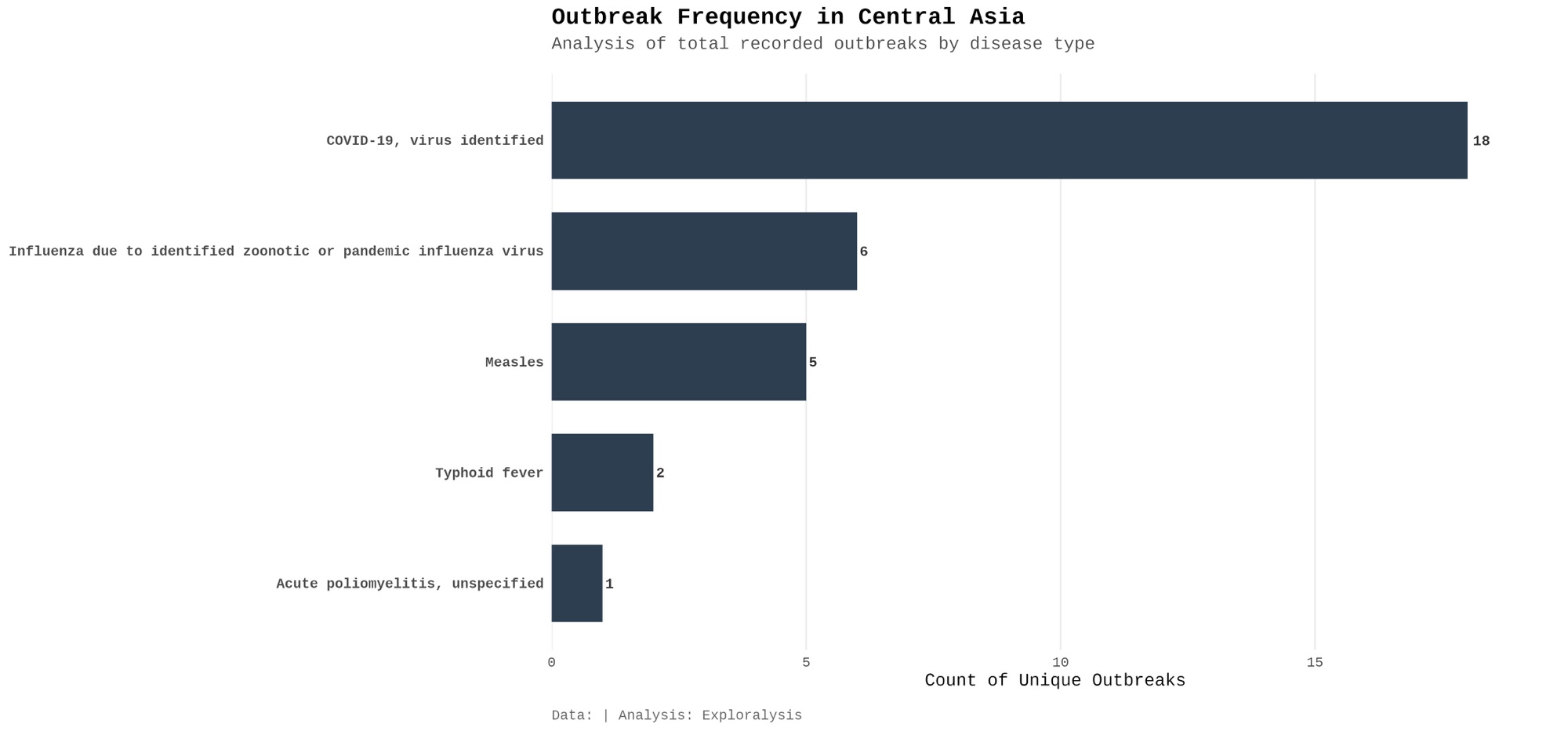
Central Asia includes countries such as Kazakhstan, Uzbekistan, Turkmenistan, Kyrgyzstan, and Tajikistan. Here COVID-19 and influenza lead outbreak records here, followed by monkeypox and other diseases.
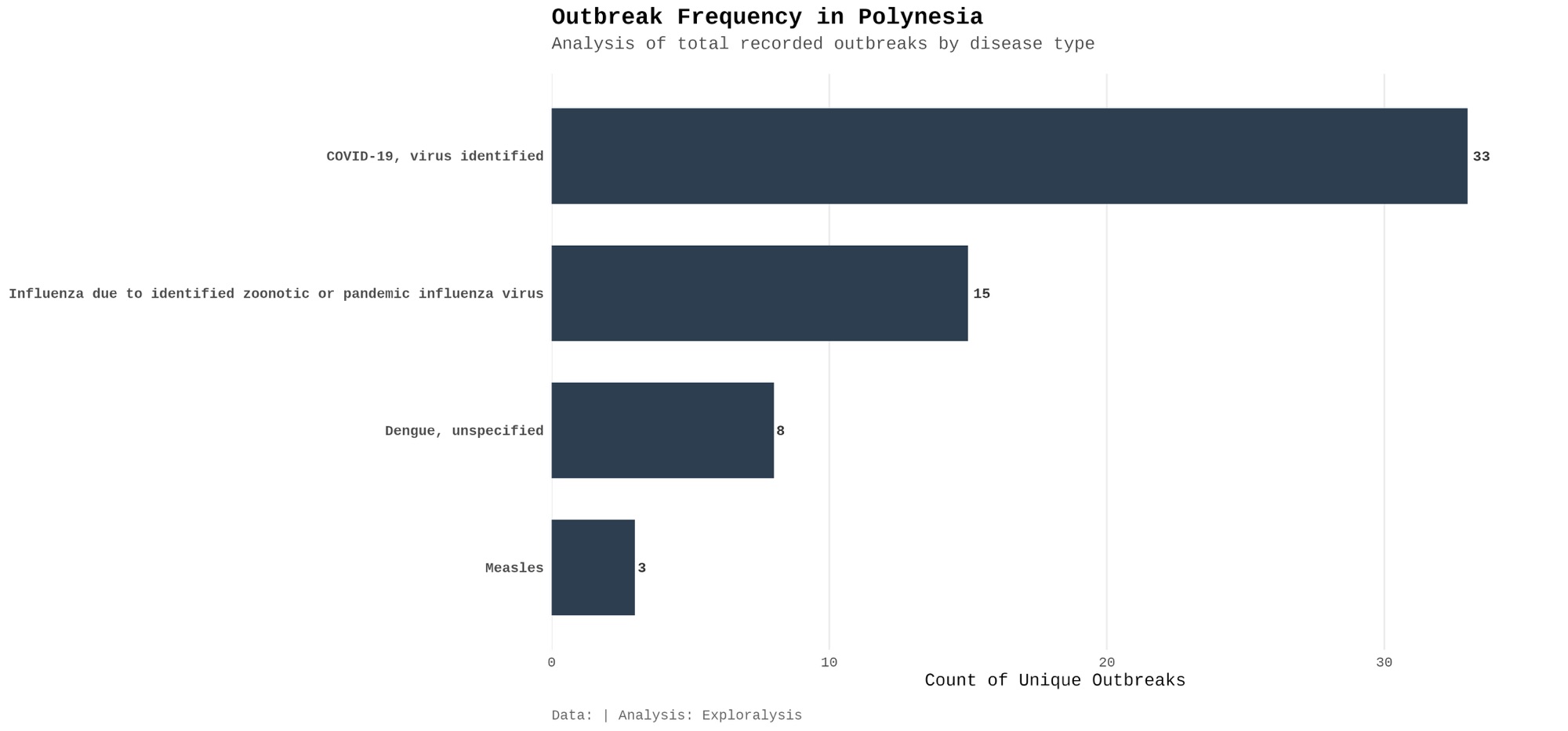
Polynesia, covering countries such as Samoa, Tonga, and Tuvalu, shows outbreaks of COVID-19, influenza, dengue, and measles.
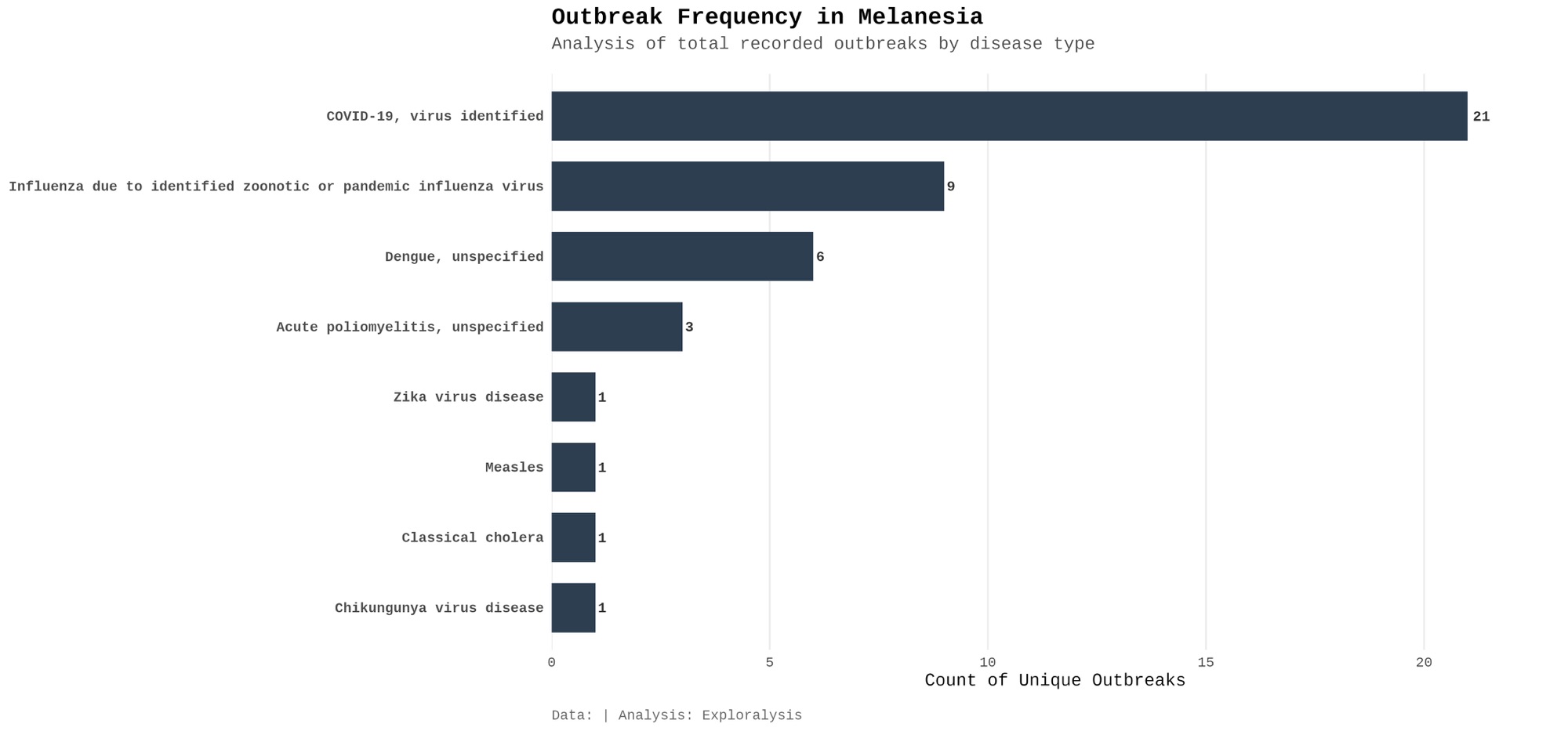
Melanesia includes countries such as Papua New Guinea, Fiji, the Solomon Islands, and Vanuatu. Here COVID-19 and influenza follow the global trend as the top outbreak diseases, followed by dengue and acute poliomyelitis.
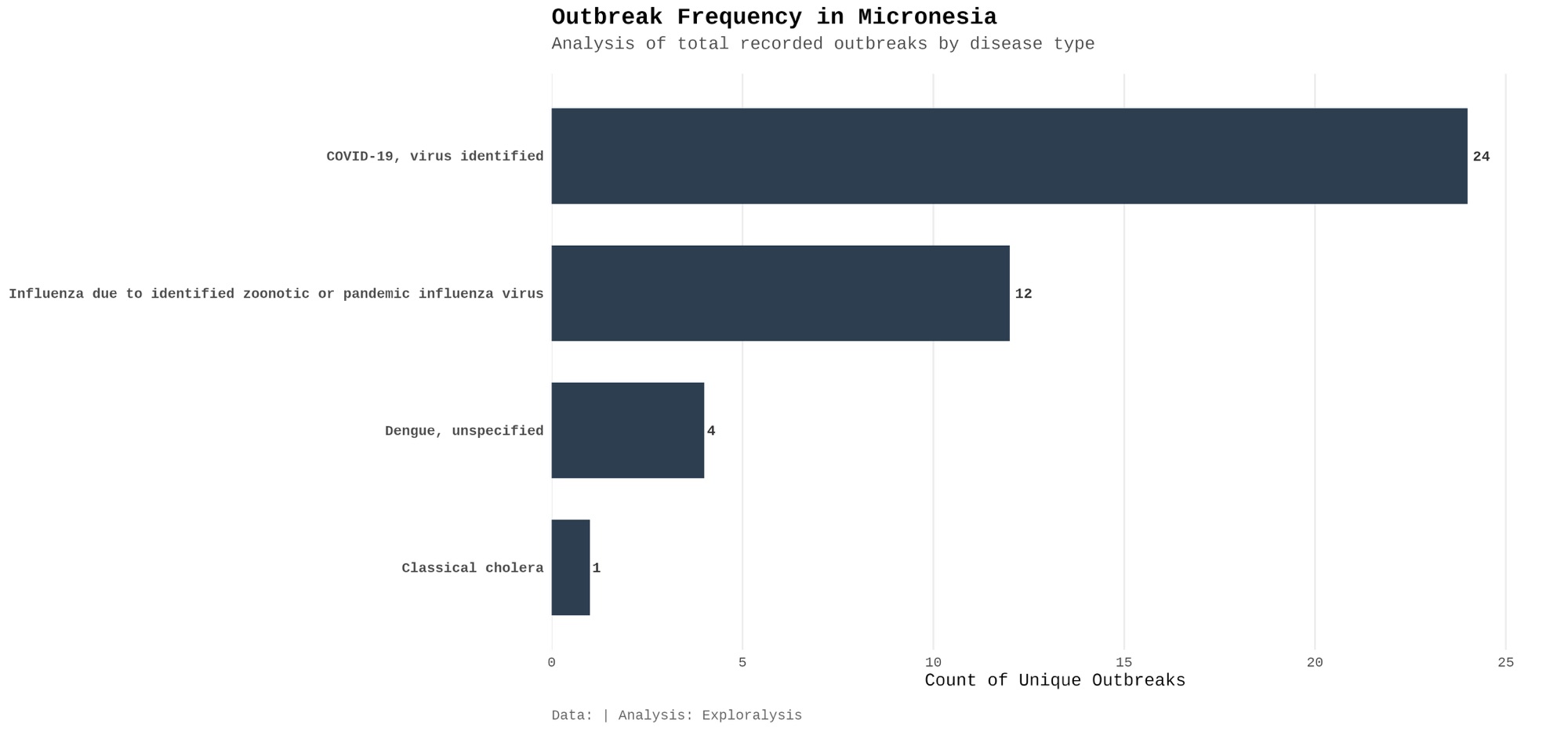
Micronesia, with countries such as the Federated States of Micronesia, Palau, the Marshall Islands, and Nauru, records outbreaks of COVID-19, influenza, dengue, and cholera.
These differences highlight how geography, climate, healthcare systems, and social conditions shape outbreak risk.
Key Takeaways and Implications
Three main lessons emerge from this analysis.
First, outbreak surveillance must remain proactive and flexible. COVID-19 demonstrated how quickly an unknown disease can rise to global dominance. Future threats may not resemble past ones.
Second, outbreak frequency is strongly influenced by social, economic, and environmental conditions. Addressing poverty, strengthening health systems, and responding to climate change are not optional. They are central to disease prevention.
Third, outbreaks do not respect borders. Effective responses require international cooperation, data sharing, and coordinated action.
History shows us where the risks lie. The challenge now is whether we are willing to act on what the data is telling us.
by: Nugroho Budianggoro
Cover image by Elena Mozhvilo